
Why this project ?
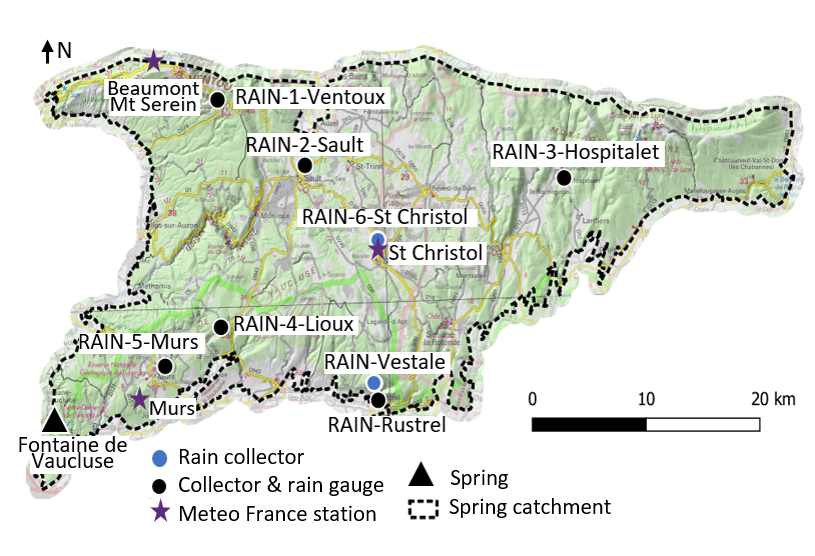
The Fontaine de Vaucluse spring is one of the largest springs in Europe in terms of flow rate. It collects most of the rain and snow that falls over an area of more than 1,000 km².
This spring has been studied since the 1980s by the University of Avignon. In order to improve our understanding of how this spring and the aquifer it drains work, we plan to combine stable isotope analyses of the water at the Fontaine de Vaucluse spring with monitoring of stable isotopes in the rainwater in its catchment area.
Why monitor rain isotopes ?
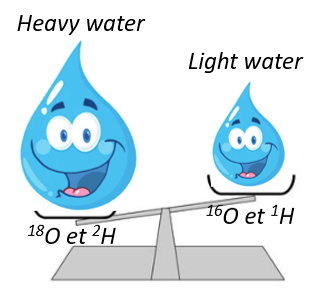
Stable isotopes are atoms of the same chemical element that do not have the same mass. The stable isotopes of water are 18O and 16O for oxygen, and 1H and 2H for hydrogen (the exponent representing the atomic mass of each isotope). Due to this difference in mass, isotopes of the same element do not behave in the same way during a phase change (solid-liquid/liquid-vapor/vapor-solid). For example, rain contains more 18O than 16O compared to the water vapor that makes up the clouds from which it formed, because 18O is heavier than 16O and therefore falls more easily due to gravity. The composition of 18O, 16O, 1H, and 2H in rain therefore varies in space and time. Measuring the relative proportions of each atom (18O, 16O, 1H, and 2H) in spring water can therefore provide information about where this water infiltrated the ground (altitude, latitude, distance from the sea/ocean). It also provides information on the period during which the rain infiltrated, as this varies according to rainfall events and seasons.
Measuring stable isotopes in rainwater and comparing them with stable isotopes in the source allows us to trace back to a rainfall event and/or an area where rain fell. This information is essential for understanding how an aquifer works, making it possible to identify how long it takes for rainwater to reach the source, but also to identify the area where the rainwater has infiltrated. It is essential for preserving water resources in terms of both quantity (anticipating floods and droughts) and quality (locating areas at risk and anticipating the spread of contaminants), which is particularly important in the context of climate change.
What does this participatory science project involve?
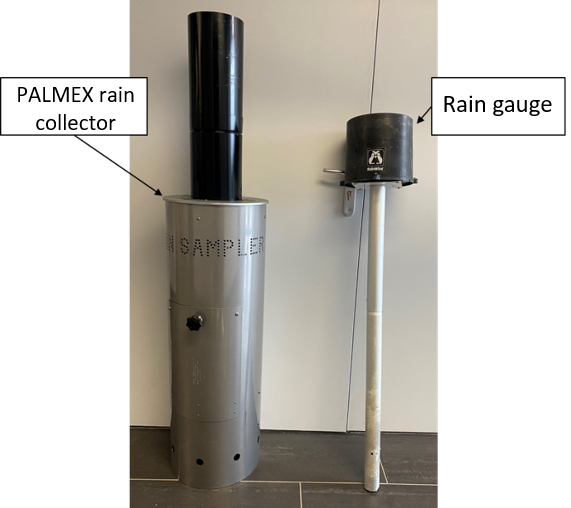
A total of eight rainwater sampling stations have been installed across the entire Fontaine de Vaucluse catchment area. Each station is equipped with a PALMEX rain collector (model RS2) and is linked to a rain gauge.
Every month, the rain collected in the rain collector is sampled by a network of volunteers, including five private individuals. Twice a year, all the samples collected are retrieved so that the laboratory can analyze the stable isotopes.
At the end of each analysis campaign, feedback is provided to the volunteers.