
Climate change highlights the importance of managing groundwater sustainably for water supply, as more extreme weather puts even more pressure on these vital resources.
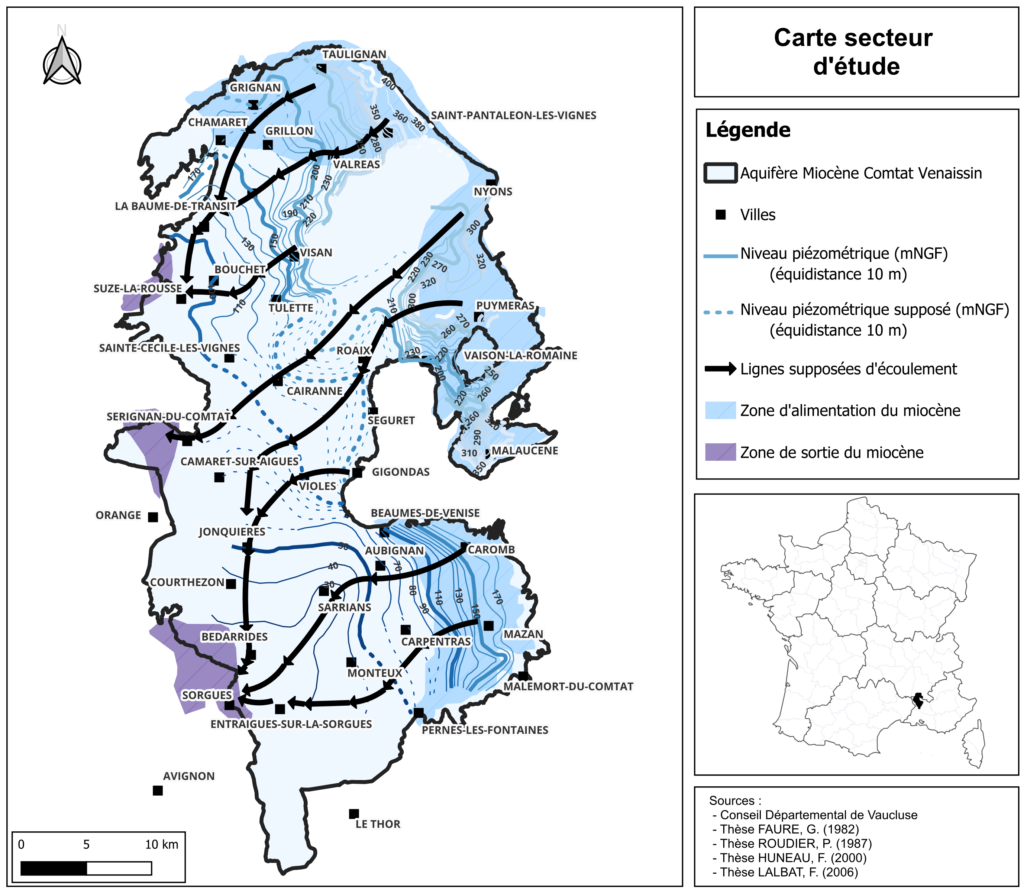
The Miocene molassic series is home to the largest groundwater reserves in the Vaucluse department. However, despite previous studies, this resource remains poorly understood in terms of water quantity, residence time, renewal rate, and exchanges with other water masses (e.g., alluvial aquifers, surface water), making its sustainable management difficult.
As part of the GeEAUde partnership chair, a first thesis began in October 2025 with the aim of improving understanding of this underground hydrosystem, paying particular attention to determining the age of its waters and identifying their circulation, recharge, and renewal processes.
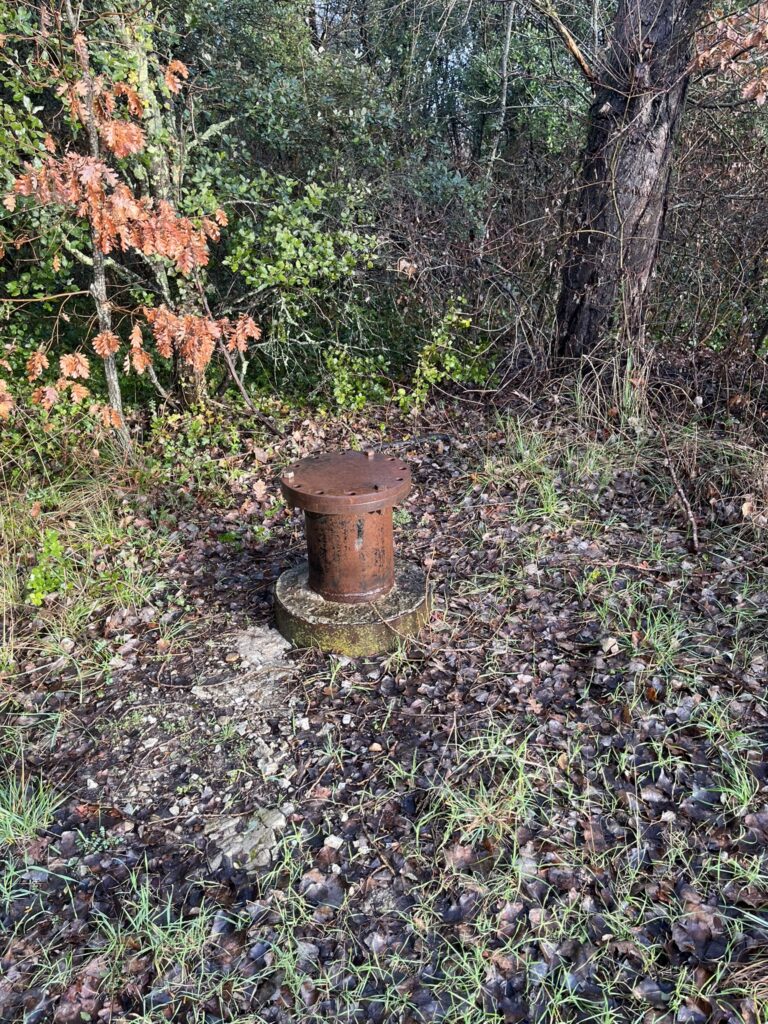
The age of groundwater will be determined, and its origins traced, using stable and radioactive isotopes, both natural and anthropogenic, present in trace amounts in these waters : 3He, 4He, 3H, Ne, 14C, d13C, dD, d18O, cations, anions, traces elements, Ra, Rn, 87Sr/86Sr isotopic ratio. Water from the Miocene aquifer of Comtat Venaissin (Carpentras-Valréas basin) will be sampled from existing boreholes and piezometers along the main flow lines and at different depths. The hydrochemical and isotopic results obtained will be compared with data acquired in the 1990s, which showed the presence of a significant proportion of old water in this aquifer. This will enable the assessment of groundwater renewal since the 1990s based on changes in water age observed over the last three decades.